The bonus multiplier, shown being applied
Recorded on a phone-width screen. The newest version is first; the two attempts it replaced are further down, kept so the difference is visible. Nothing here is live in the app yet.
Polished — watch this one
You said the oval was way too small for the number. It was, and the cause was a one-line bug: the pill was set at 24px type inside an 18px line box, so the fill had 0.25px of clearance above and below the digits. There is now 7.6px. The line-height was pinned to stop the row growing and shoving the board — but the element is absolutely positioned, so it was never in flow and could never have moved anything. The constraint was real; it was aimed at the wrong element.

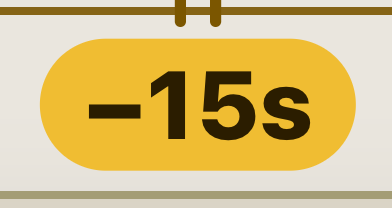
−15sAlso lighter: weights came down from 860/880/900 to 800/820/840, since the heaviness was compounding the cramping. Digits switched to proportional so −15s sits 5px tighter. The multiplier chip had the same starvation for a genuine reason — it is in flow, so a filled chip taller than an unfilled one really would nudge the board — and that is now solved by reserving the row height for both states instead of starving the chip.
One real regression surfaced while checking this: at 200% text the derivation wraps to two lines, which the reserve did not account for. Fixed. The board's top offset is now sampled every 20ms through the whole sequence and is identical in both themes at 390, 320 and 320 at 200%.
Before the polish — right shape, squashed pill
You said the last one flashed ten different things. It did: the credit figure was stated four separate times — as the resolve, then as a courier flying to the tally, then as a +15 badge, then as the tally total changing. This version subtracts rather than slowing down.
Four events now, counted off the frame-by-frame below: the word and the whole equation arrive together as one line; it holds ~640ms so you can read it; it resolves in place into the answer; the answer holds another ~640ms and just sits there; then that same element travels to the tally and the total changes when it lands. The separate courier and the +15 badge are deleted.
The thing I got wrong before: I split the equation into two arrivals 280ms apart so the multiplication would be “witnessed being applied”. That turned one readable line into two competing flashes, which is why you preferred the earlier version. The equation is a fact to read, not an animation to watch.
The count, at 80ms per cell
ARIEL at the quietest band. One line holds, becomes −6s in place, sits, then travels to the tally — and nothing else moves.
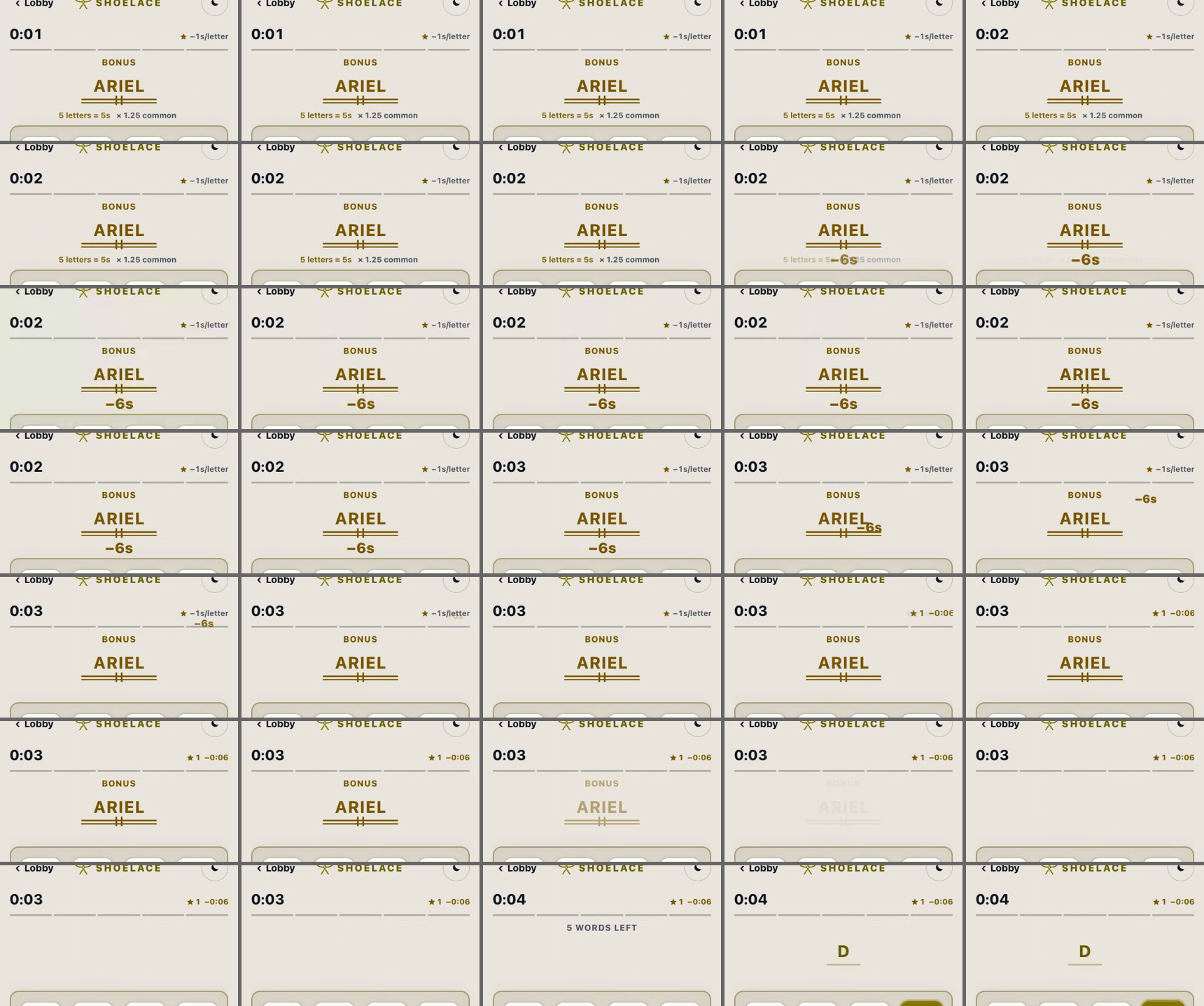
Second attempt — the one that flashed
The first attempt (further down) had five defects that only showed up when I stepped through the recording at 100ms. The biggest: the three beats all landed inside 150ms, which is below the threshold where the eye can order them, so the multiplication was never actually witnessed. And the answer appeared somewhere else, at a smaller size, while the arithmetic that produced it lingered on screen for half a second after the word had already gone.
Now it is one line that assembles and then becomes its own answer in the same place: base at 0ms, × 2.50 obscure joins it at +280ms, and at +560ms the whole line resolves into −15s at nearly twice the size, in the position the equation occupied. Then it flies to the tally. Nothing gates input; starting the next word cancels cleanly.
The evidence, at 100ms per cell
Read left to right, top to bottom. CRAPED at the loudest band: the base holds alone for ~400ms, the multiplier joins it for ~300ms, then the line becomes a large filled −15s while the word dims for exactly that moment. Note the arithmetic is gone before the word is, not after.
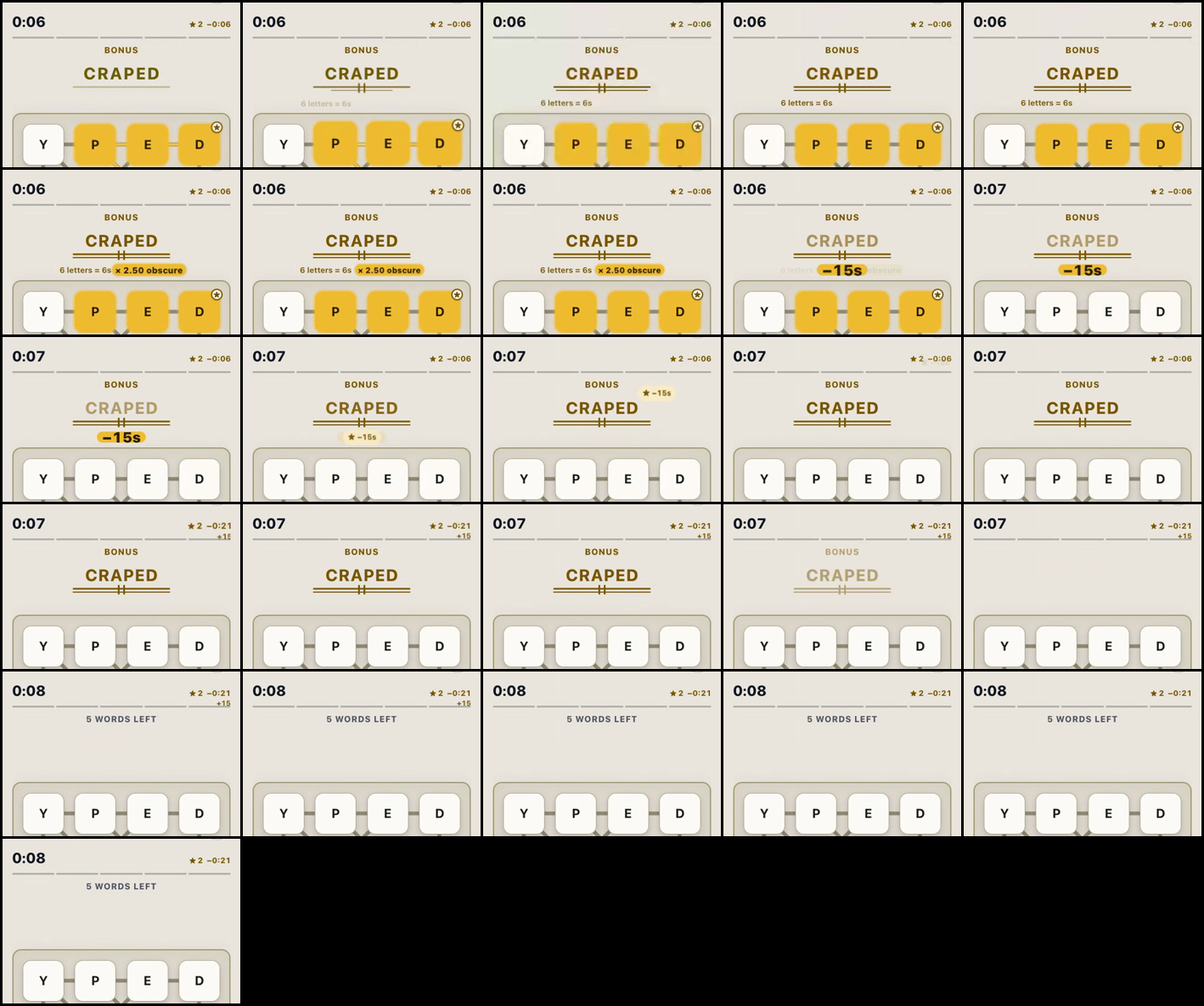
ARIEL at the quietest band gets the identical four beats on the identical clock. Only the ornament scales down — no fill, no overshoot, shorter travel. Previously this band had no perceptible arrival at all, which meant the feature did nothing for the majority of words a player actually finds.
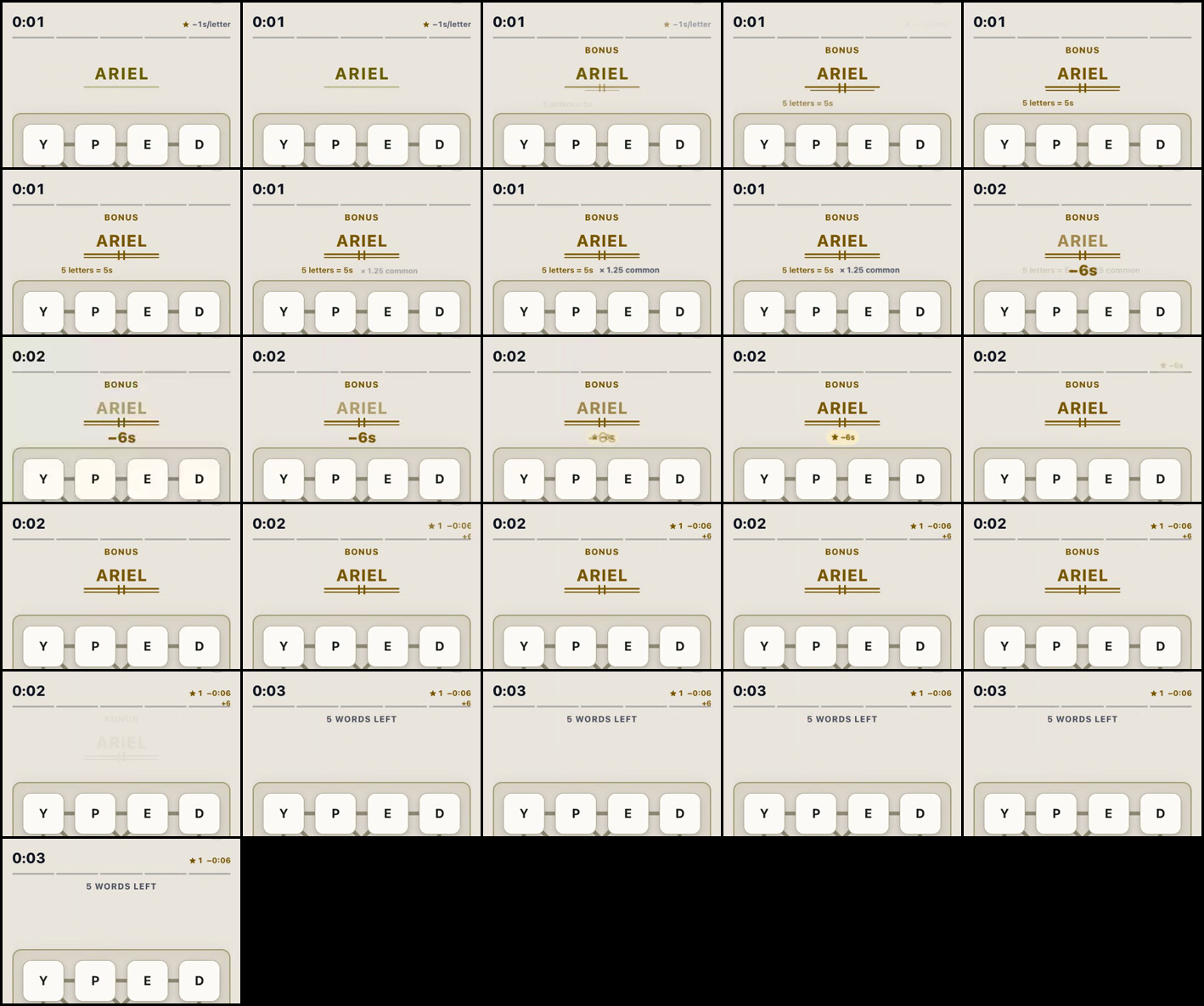
The first attempt, for comparison
Superseded. Kept so the difference is visible.
Four bonus words in rising rarity, then the five required words, then the results screen.
- ARIEL —
5 letters = 5s × 1.25 common→ −6s - DRAPE —
5 letters = 5s × 1.75 uncommon→ −9s - APED —
4 letters = 4s × 2.25 rare→ −9s - CRAPED —
6 letters = 6s × 2.50 obscure→ −15s
The chip is deliberately unequal across bands. At common it arrives quietly with no fill; by obscure it is a filled amber token that travels further and overshoots. That difference is the whole point — the complaint was that a rare word and a common word looked like the same event.
Slowed 2.5×
The three beats land inside a 1,050ms window, which is too fast to judge at speed. This is the same recording slowed down so the ordering is legible: base first, then the rarity chip at +70ms, then the result at +150ms, then the courier lifts off the cord and flies to the tally at +260ms.
What is not in the video
Band 0. The only two everyday words on this board are rape and raped, which I was not going to put in a review recording. Band 0 does now print × 1.00 everyday rather than staying silent — a silent bottom rung would have recreated the same “where did my bonus go” confusion the change exists to fix — and it prints quietly, with no fill and no overshoot. It is covered by tests and by a still.
Results screen
The end of the video is the part with the show/hide working toggle deleted. Every priced word now stacks word, credit and derivation full-width and always visible, with the rule stated once above the list.